
Commercial
Motorised Blinds & Control Systems
Motorised blinds and shading controls for commercial buildings, from simple grouped operation to automated systems — designed, coordinated, commissioned and handed over.
Send us your drawings for a quotationRequest a commercial survey
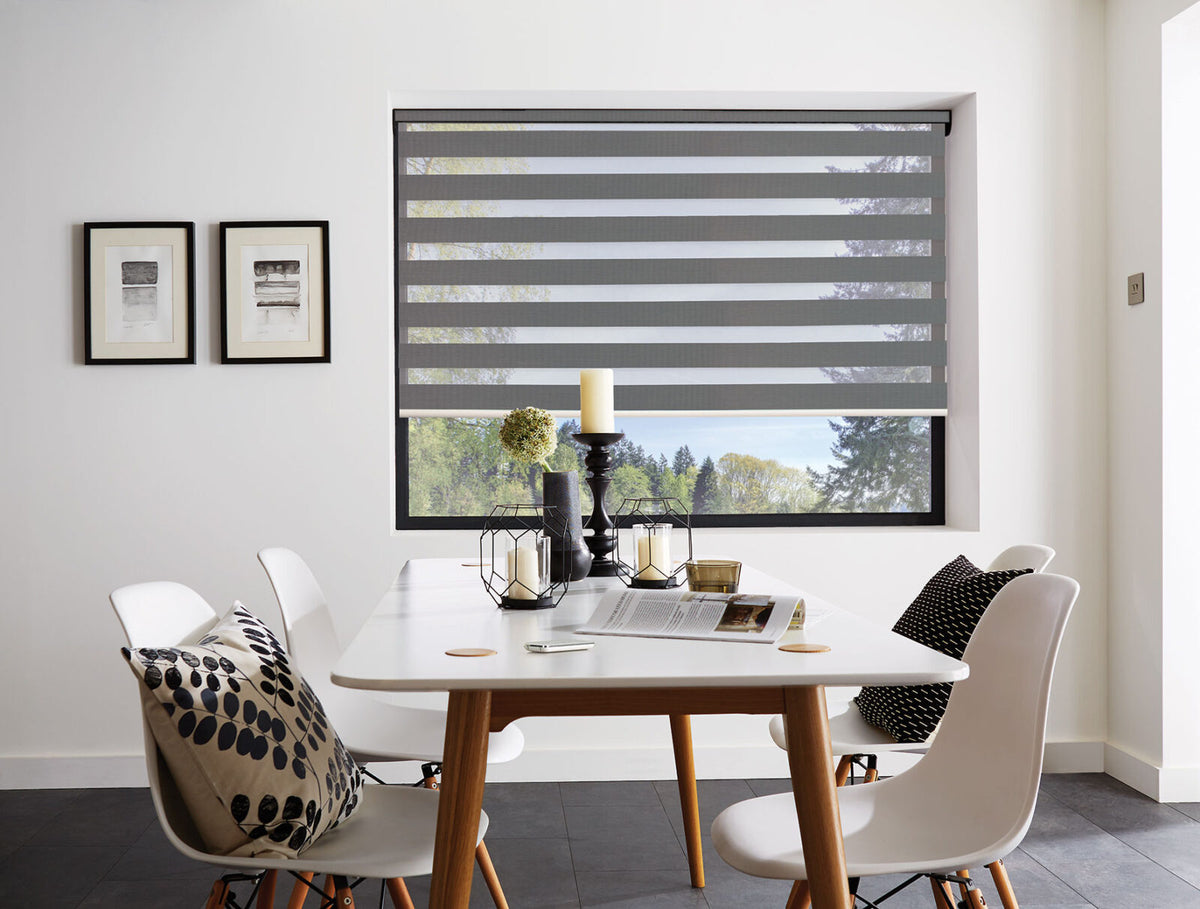
What we deliver
Commercial motorisation ranges from a few blinds on a wall switch to large groups of blinds operated by zone, schedule or sensor. We help decide what level of control a project actually needs, then supply, install and commission motorised blinds and their controls, and hand over the information the building's users and facilities team need.
Where motorisation makes sense
- High-level windows, rooflights and glazing that is hard to reach
- Large blinds that are heavy to operate by hand
- Rooms with many blinds that should move together
- Spaces where cords must be eliminated for safety
- Buildings where shading should respond consistently to sun or schedules
System design questions
A good motorised scheme starts with the right questions:
- How many blinds, how large, and how should they be zoned or grouped?
- Mains, low-voltage or battery-powered motors — which suits the building and maintenance plan?
- Local wall controls, handheld remotes, central control or a combination?
- Are sensors or schedules required?
- Is an interface with a building management system needed?
- How should blinds behave in a fault or emergency, and can they be operated manually?
- Who will maintain the system once the building is occupied?
Coordination and responsibilities
Motorised blinds cross over with the electrical and controls packages, so responsibilities need to be agreed in writing. We define who provides power supplies and fused spurs, containment and cabling, control panels, any network or building-controls interface, builder's work and commissioning. Settling this at tender stage avoids gaps and duplicated costs later.
Integration
Integration with building controls depends on the exact motors, controllers and control topology. We confirm compatibility for the specific hardware proposed rather than promising a platform or protocol in general terms. Where control diagrams and wiring requirements are available, we issue them as revision-controlled submittals.
Strong solutions
Motorised roller blinds are the most common choice, with screen, dim-out or blackout fabrics. Motorisation is also available on selected vertical, Roman and pleated systems, and on motorised curtain tracks. For overhead glazing, see roof lantern blinds and roof window blinds. Availability and sizes are system specific and confirmed at survey.
Manual override and safety
Motorised blinds remove operating cords, which is one reason they are chosen for schools, public areas and high-level glazing. It is still worth deciding how blinds should behave if power is lost or a motor fails, and whether any blinds need a manual fallback. These choices depend on the system selected and are confirmed during design.
What we need from you
- Drawings showing the windows to be motorised
- How you want blinds grouped and controlled
- The electrical design, if one exists, and who is responsible for power
- Any building-controls requirements in the specification
Commissioning and handover
We commission each blind — setting limits, grouping and control allocation — and test operation before handover. The handover pack includes controller instructions, a grouping or zone schedule, a commissioning record, remote allocations where used and maintenance information. Our maintenance service can support motor and control diagnostics later.
Commercial services
Questions we get asked
Commercial
Send us your drawings for a quotation
Design, specification, estimating, supply, project management, installation and aftercare for blinds, curtains, shading and solar control.
Start a commercial enquiryCall 01223 756519
Or call 01223 756519