
Commercial
Solar Control, Glare & Blackout
Glare control, solar control and blackout are three different performance goals. We help match the fabric and system to what each space actually needs.
Send us your drawings for a quotationRequest a commercial survey
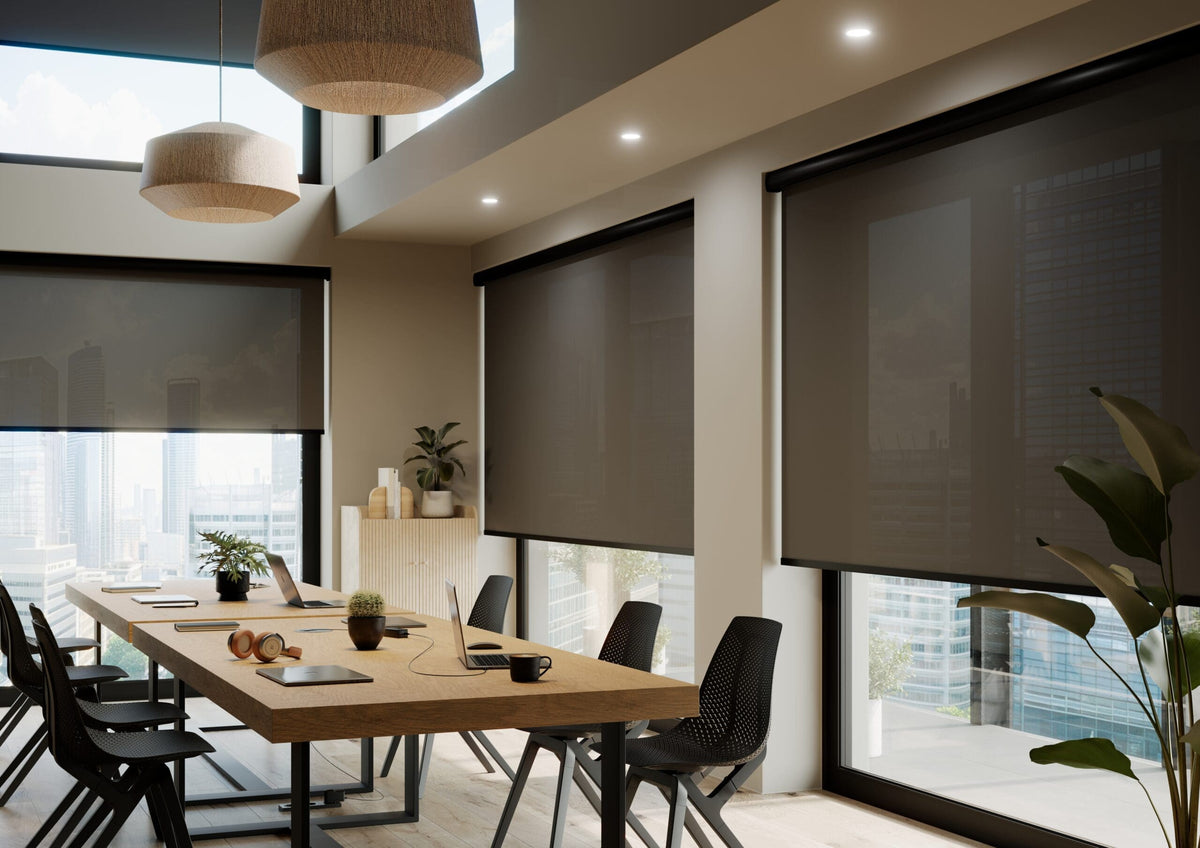
Three separate goals
Commercial specifications often ask blinds to "control the sun", but that can mean very different things. Treating glare, solar control and blackout as one requirement usually leads to the wrong fabric in at least some rooms.
Glare control
Reducing visual discomfort and screen contrast from bright sky or direct sun, while keeping daylight and ideally a view out. Typical in offices, classrooms and ICT spaces.
Solar control
Managing how much of the sun's energy and light enters through the glazing, to help limit heat build-up on exposed elevations.
Blackout and dim-out
Reducing transmitted light to the level the room use requires — dim-out for presentations and screens, blackout for rooms needing a much darker result.
Privacy
Often a fourth consideration. Screen fabrics can look different by day and at night, so privacy needs are worth stating separately.
Strong solutions
- Solar screen blinds — screen fabrics that soften glare and manage heat while keeping a view, depending on the fabric.
- Roller blinds with reflective or backed fabrics where solar management is the priority.
- Blackout roller blinds, with cassettes or side channels where light gaps need reducing.
- Vertical blinds in dim-out or blockout fabrics for wide glazing.
- Motorised and automated shading so blinds respond consistently to sun or schedules.
- Rooflight shading for roof lanterns and roof windows, where overhead sun is often the main source of heat and glare.
- External solar shading where the project suits it.
Blackout fabric is not total darkness
A blackout fabric stops light passing through the fabric itself, but light still travels around the edges, above the roller and below the bottom bar. An engineered light-exclusion system — with cassettes, side channels and a bottom channel — is a different thing, and should be specified as such where a room genuinely needs it. We will be clear about which you are getting.
Working from real fabric data
Performance varies with the fabric, its openness and its colour. For performance-led tenders, we record the actual values for the exact fabric and system proposed, using the manufacturer's technical data, rather than applying one fabric's figures to a whole range. FR fabric options are available on selected contract ranges, and certificates are supplied for the specified fabric.
When external shading comes first
Internal blinds work after solar energy has already passed through the glass. Where overheating is the dominant design problem, suitable external shading acts before that happens and should be considered early in the design. We will say so if internal blinds alone are unlikely to meet the brief.
What we need from you
- Elevations or plans showing orientation and glazing
- How each room is used, and whether screens are involved
- Any performance targets in the specification
- How dark rooms such as presentation spaces need to be
Coordination and handover
We confirm fabric choices through samples and submittals, coordinate fixings and any side channels with window and ceiling details, and hand over fabric details and care information for each area.
Related advice
Questions we get asked
Commercial
Send us your drawings for a quotation
Design, specification, estimating, supply, project management, installation and aftercare for blinds, curtains, shading and solar control.
Start a commercial enquiryCall 01223 756519
Or call 01223 756519