
Blinds, Shutters & Curtains for Kitchens
Kitchen window coverings have to work around steam, cooking residue, sinks, worktops and doors that are opened all day. Wipeable materials and sensible positioning matter as much as colour.
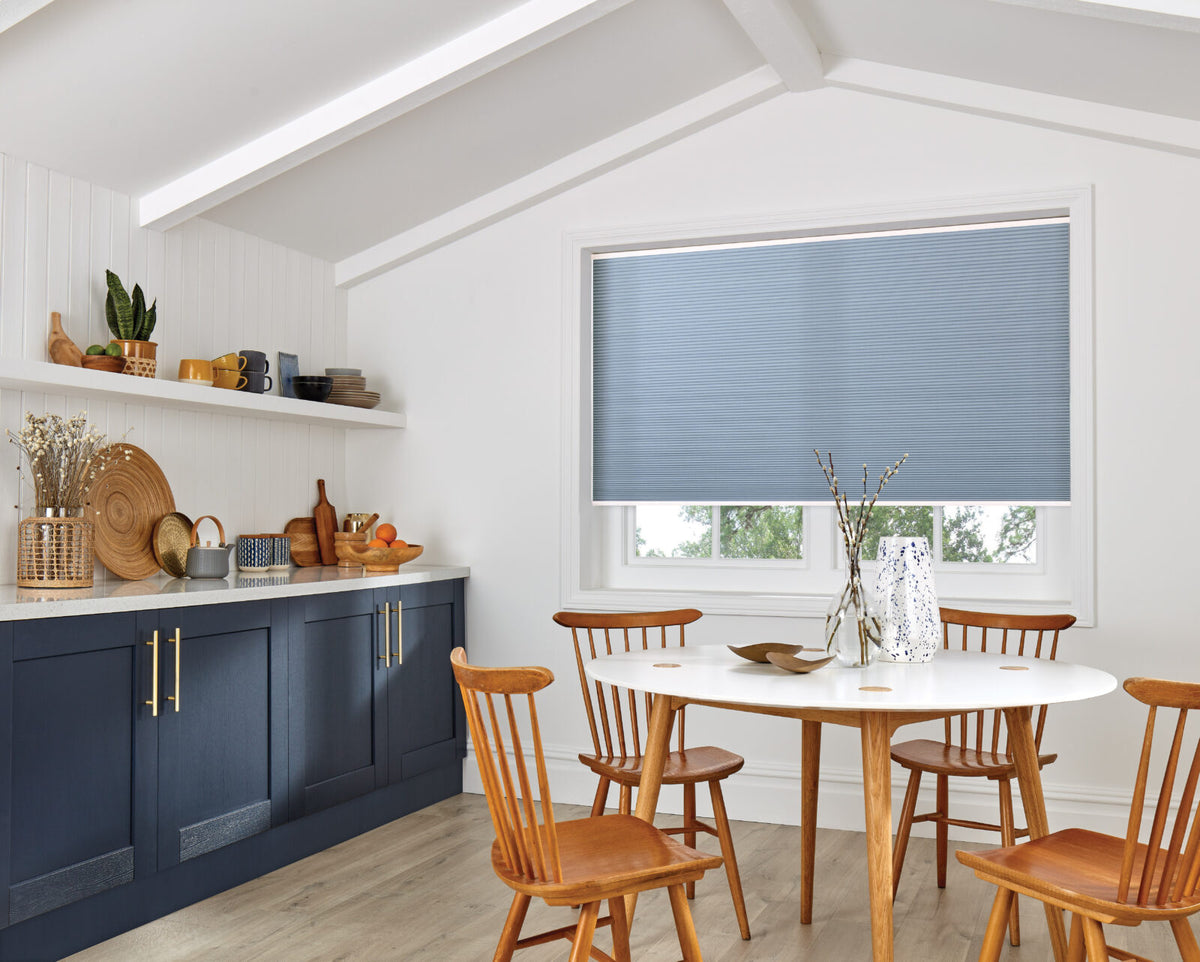
What usually matters in a kitchen
- Wipeability – cooking leaves a film on nearby surfaces, so materials that clean easily last better.
- Moisture – steam from cooking and the kettle, and splashes near the sink.
- Access to the window – you often have to reach across a worktop or sink to open it.
- Clear worktops – a blind that stacks on the sill or hangs over the tap gets in the way.
- Safety near heat – fabric and controls must stay well clear of hobs and any open flame.
- Glare and privacy – many kitchens face gardens or neighbours, and extensions often have large glazing.
Often a good fit
- Roller blinds in selected wipeable or moisture-resistant fabrics – compact, simple and easy to raise clear of the worktop.
- Faux wood blinds – a warm timber look in a material that copes better with steam, with slats that tilt for privacy.
- Aluminium Venetian blinds – slim, wipeable and good at redirecting glare.
- Pleated and cellular blinds – selected ranges suit kitchens and stack neatly in small spaces.
- Perfect Fit blinds – on compatible windows and doors, the blind sits in the frame and moves with the sash, leaving the sill free.
- Café-style shutters in moisture-resistant materials on selected ranges – privacy at worktop height with the upper glass left clear.
Depends on the position
- Roman blinds and curtains can work well at the dining or seating end of an open-plan kitchen, away from the sink and hob. Right above a sink or next to the cooker they tend to mark and absorb cooking smells.
- Day & Night blinds are a good choice for privacy with daylight in kitchens; choose a fabric suited to the room and keep them clear of the hob.
- Vertical blinds suit large patio or sliding doors in kitchen extensions, where the louvres can be drawn fully aside for access.
Usually avoid or assess carefully
- Fabric near the hob – we do not recommend fabric or controls where they could reach cooking appliances or open flames.
- Natural timber above the sink – regular splashes and steam are hard on real wood; faux wood is usually a better choice.
- Delicate or textured fabrics – these hold grease and are hard to clean in the cooking zone.
- Blinds that rest on the sill – anything stacking into taps, plants or appliances will get damaged or become awkward to use.
Doors and kitchen extensions
Many kitchens now open onto the garden through bifold, patio or French doors. Door blinds need to clear handles and move with the door; see bifold door blinds, patio door blinds and French door blinds. For large glazing that gets a lot of sun, our heat and glare page explains the options.
Layered schemes
Kitchens usually suit a single practical layer. Where there is a dining or seating area, a practical blind on the kitchen windows paired with curtains or a Roman blind in the seating area gives a softer feel without compromising the working side of the room.
A free home survey lets us check clearances around taps, handles and appliances before you choose.
Options to consider
- Roller BlindsCompact, wipeable fabric options that clear the worktop
- Faux Wood BlindsA timber look that copes better with steam
- Venetian BlindsSlim, wipeable slats that redirect glare
- Perfect Fit BlindsSits in the frame and leaves the sill clear
- Café-Style ShuttersPrivacy at worktop height with daylight above
- Bifold Door BlindsBlinds that work with folding kitchen doors
Questions we get asked
Free, no obligation
Book your Free Home Survey
We’ll measure properly, bring samples to see in your own light, talk you through what suits each window, and give you a no-obligation quotation.
Book a Free Home SurveyVisit our showroom
Or call 01223 756519