Blackout Blinds

“Blackout blind” can mean two very different things: a blind made from blackout fabric, or a system designed to manage the light that gets in around the edges. Knowing which you need is the key to a genuinely dark room.
Book a Free Home Survey Call 01223 756519

Blackout Blinds

Three levels of darkness

"Blackout" is used loosely, so we separate it into three levels and agree which one you actually need before anything is ordered.

Level 1: blackout fabric

Available on suitable roller, Roman, vertical, pleated and other blinds. The fabric stops light passing through the material itself, but a conventionally fitted blind still leaves small gaps at the sides, top and bottom, and those gaps are where most early-morning light gets in.

Level 2: enhanced room darkening

A more closely fitted system reduces that edge light further. That can mean face-fixing a roller outside the recess so it overlaps the opening, a frame-fitted Perfect Fit blind with a blackout fabric sitting close to the glass, or a cellular blind whose construction sits snugly in its frame.

Level 3: specialist blackout systems

Where darkness is a genuine requirement, such as a nursery, a shift worker's bedroom or a media room, a purpose-designed system manages the edges as well as the fabric. Typically that means a cassette that encloses the roll at the top and side channels that the fabric runs within, so light cannot travel straight past the edge of the blind. Availability and the exact construction depend on the system and the window.

We do not promise literally zero light unless the exact system is designed and specified to deliver it for your window.

Questions we ask at the survey

  • How dark does the room genuinely need to be, and at what time of day?
  • Is early-morning daylight or a street light the problem?
  • Is the window standard, in the roof or an unusual shape?
  • Do you need to open the window, reach the handle or keep a vent clear?
  • Manual or motorised operation?
  • Are there handles, trickle vents or other obstructions the blind must clear?

Roof windows

Sloping roof windows need their own purpose-designed blackout blinds that run in side guides. See roof window blinds.

Layering

A blackout roller or cellular blind with blackout curtains over it is often the most effective answer for a bedroom, because the curtain covers the edge gaps the blind leaves. Shutters with curtains suit rooms where reduced light and appearance matter more than engineered darkness.

Key features

Light control
Engineered blackout systems
Motorisation
Available on selected ranges

Honest suitability

Is it right for your window?

Every recommendation comes with a reason. Where something else would serve you better, we say so — and suggest what to consider instead.

Where this works well

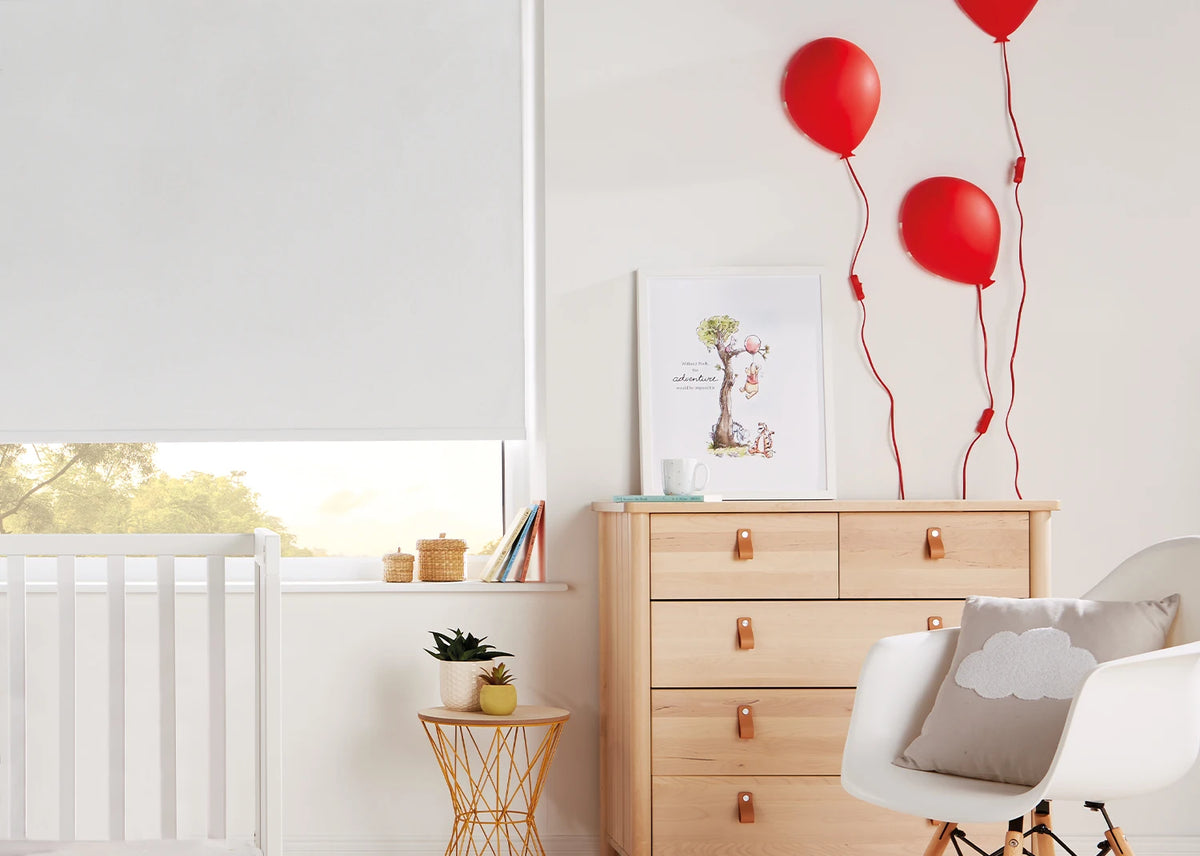
  • Nurseries and children's bedrooms Recommended

    Light at dawn and in summer evenings is the usual problem, and a specialist system or a well-fitted blackout blind with curtains deals with it far better than fabric alone.

  • Daytime sleeping and shift work Specialist survey

    Where you need to sleep in full daylight, the edge light around a conventional blind matters, so an engineered system is usually the right starting point.

    Worth knowing: The exact level of darkness depends on the system, the window and how closely it can be fitted. We confirm this at survey rather than promising total darkness.

  • Home cinemas and media rooms

    Cutting screen glare and daylight makes a clear difference to picture quality.

    Worth knowing: Wide or multiple windows may need several blinds, and each join or edge is a potential light gap.

  • Roof windows With conditions

    Purpose-designed roof-window blackout blinds run in side guides and can darken a loft bedroom well.

    Worth knowing: It must be a blind designed for the specific roof window, not a standard blackout roller.

Where we’d suggest something else

  • Expecting total darkness from fabric alone

    Why: A blackout fabric blocks light through the material, but a recess-fitted blind still admits light round its edges.

    The limitation: A darker or thicker fabric does not close the side gaps. The problem is the fitting, not the material.

    Consider instead: Specialist blackout system or blinds layered with curtains

  • Living rooms needing daytime light

    Why: Blackout is all or nothing when the blind is down, which is rarely what a living space needs during the day.

    The limitation: You lose daylight to gain privacy or glare control.

    Consider instead: Day & Night blinds

Fabrics and finishes

Blackout fabrics are made with an opaque coating or a dense construction so light does not pass through the material. They come in plains, textures and some patterns across roller, Roman, vertical, pleated and cellular ranges, with the choice varying by blind type.

The fabric colour facing the window can differ from the room side, so a pale room-side colour does not mean the blind lets more light through. We bring samples to your survey so you can hold them against the window.

Controls

Chain, cordless and motorised operation are available depending on the blind type and system. Specialist blackout systems with a cassette and side channels are available with manual and motorised operation on selected ranges.

Motorised operation is worth considering for large or hard-to-reach bedroom windows, and for blinds you want to close on a schedule.

Child safety

Internal blinds supplied in the UK must meet child-safety requirements, following BBSA guidance, and the blinds we fit are supplied with the required safety devices.

Blackout blinds are very often bought for nurseries and children's bedrooms. In those rooms we normally recommend cordless or motorised operation, because it removes the cord or chain altogether. Where a chain is used, the safety device is fitted and secured at the correct height.

Keep cots, beds and climbable furniture away from the window whatever the control.

Compared with the alternatives

Blackout curtains

Softer and warmer-looking, and they can cover the whole window surround, including the edge gaps a recess blind leaves. Often used over a blind rather than instead of one.

Pleated and cellular blinds

Compact and close-fitting, especially in a frame-fitted version. A cellular blackout blind in a well-fitted frame gives strong room darkening with a small stack.

Perfect Fit blinds

The frame sits on the glazing bead, so the blind is close to the glass with small edge gaps. A good middle level between fabric-only blackout and a specialist system on compatible uPVC windows.

Day & Night blinds

For rooms that need privacy and glare control more than darkness. Not a blackout solution.

Questions we get asked

Will a blackout blind make my bedroom completely dark?

A blackout fabric blocks light through the blind, but light can still enter around a conventional blind. For near-total darkness, compare a specialist system or a layered scheme.

Is a darker fabric better?

Not for edge light. Changing fabric does not remove the gaps around the blind.

What suits a nursery?

Usually a cordless or motorised blackout option, fitted to reduce edge light, sometimes with curtains.

What is the difference between a blackout blind and a total blackout system?

A blackout blind uses a fabric that stops light through the material. A specialist blackout system also manages the edges, usually with a cassette at the top and side channels, so less light gets past. Which one you need depends on how dark the room must be.

Can blackout blinds be motorised?

Yes, on selected roller, cellular and specialist blackout systems. We confirm what is available for your window at the survey.

Free, no obligation

Book your Free Home Survey

We’ll measure properly, bring samples to see in your own light, talk you through what suits each window, and give you a no-obligation quotation.

Book a Free Home SurveyVisit our showroom

Or call 01223 756519