
Window Treatments for Thermal Comfort
A window covering adds another layer between the room and the glass, which can make a room feel less chilly near the window. How much difference it makes depends on the product, how well it fits and whether it is closed at the right times.
What usually matters
- Construction – some products trap a layer of air, which is what helps a window feel less cold.
- Fit and gaps – air moves around the edges of a covering, so gaps at the sides, top and bottom reduce the benefit.
- The glazing and window condition – a draughty frame or single glazing will behave differently from modern double glazing.
- Use – a thermal blind left open on a winter evening does nothing; closing coverings at dusk matters.
- Radiators – long curtains over a radiator under the window can trap heat behind them.
Often a good fit
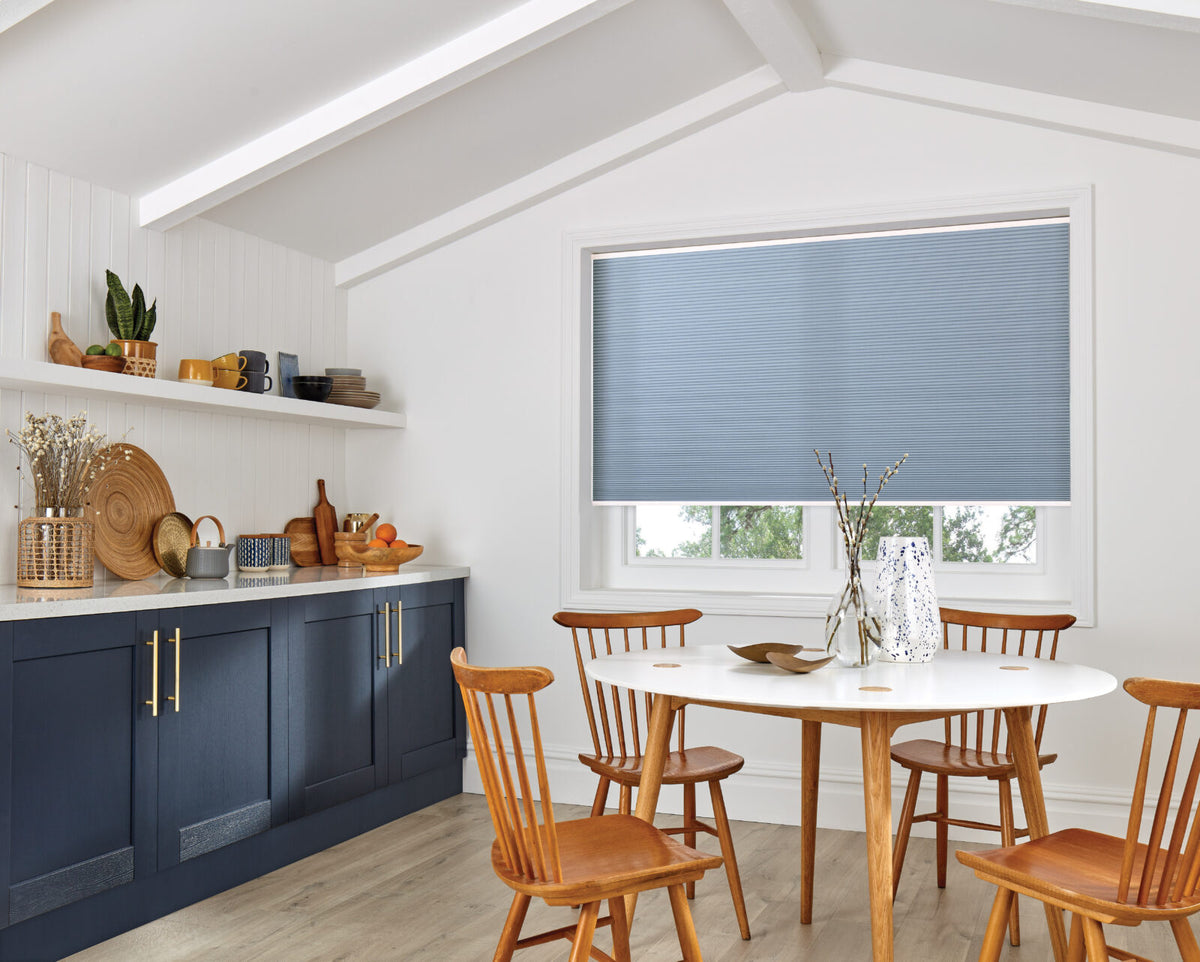
- Cellular (honeycomb) blinds – the honeycomb construction traps air within the blind, creating an insulating layer. Frame-fitted versions on suitable windows reduce gaps further.
- Interlined curtains – an extra layer between the face fabric and the lining adds body and can improve insulation, especially when curtains are generous and reach the floor or sill.
- Shutters – closed panels add a solid layer at the window and can help a room feel less draughty.
- Layered schemes – a blind in the recess with curtains in front creates two layers and covers more of the gaps.
- Perfect Fit blinds – on suitable windows, fitting into the frame reduces the edge gaps a recess blind leaves.
Depends on the window
- Roman blinds with a thermal or blackout lining add a fabric layer and suit period rooms, but sit in or over the recess with some gaps.
- Roller blinds are a single thin layer; they help most when combined with curtains.
- Curtains over radiators – where the radiator is directly beneath the window, sill-length curtains or a blind are often a better choice than floor-length curtains.
Usually compare another solution
- Slatted blinds such as Venetian and vertical blinds are excellent for light control, but air moves freely between the slats, so they add little as a thermal layer.
- Unlined or sheer curtains look light and airy but do little for a cold window.
- Draughty frames – if cold air is coming through the window itself, the frame or seals may need attention first; a blind is not a substitute for repairs.
Getting the best from a thermal layer
- Close blinds and curtains at dusk in cold weather.
- Choose curtains with enough width to overlap in the centre and returns that wrap round to the wall.
- Reduce edge gaps where possible with frame-fitting or careful recess measurement.
- In summer, open coverings when you want the room to breathe, and see heat and glare for sunny rooms.
What we will not claim
Thermal benefit depends on the product, fit, glazing and how it is used, so we do not quote energy savings or bill reductions. We will explain which options are likely to make the most difference at your windows and why.
Which rooms benefit most
Thermal layers tend to make most difference in rooms used in the evenings, in bedrooms, and in rooms with large areas of glass such as conservatories and extensions. North-facing rooms that get little winter sun often feel the chill most. In these rooms, it is worth prioritising a closer-fitting blind or a lined curtain over a purely decorative choice.
At a free home survey we can look at the windows, radiators and recesses together.
Options to consider
- Pleated & Cellular BlindsHoneycomb construction that traps air
- Thermal & Interlined CurtainsAn extra layer for warmer-feeling rooms
- Layered Window TreatmentsBlind and curtain combinations
- Perfect Fit BlindsFrame-fitted to reduce edge gaps on suitable windows
- Full Height ShuttersSolid panels at the window
Questions we get asked
Free, no obligation
Book your Free Home Survey
We’ll measure properly, bring samples to see in your own light, talk you through what suits each window, and give you a no-obligation quotation.
Book a Free Home SurveyVisit our showroom
Or call 01223 756519