
Outdoor living
External Solar Shading
Shading fitted outside the glass stops the sun before it reaches the room, which is generally more effective for heat than a blind inside. Here is when it is worth considering and what decides whether it suits your home.
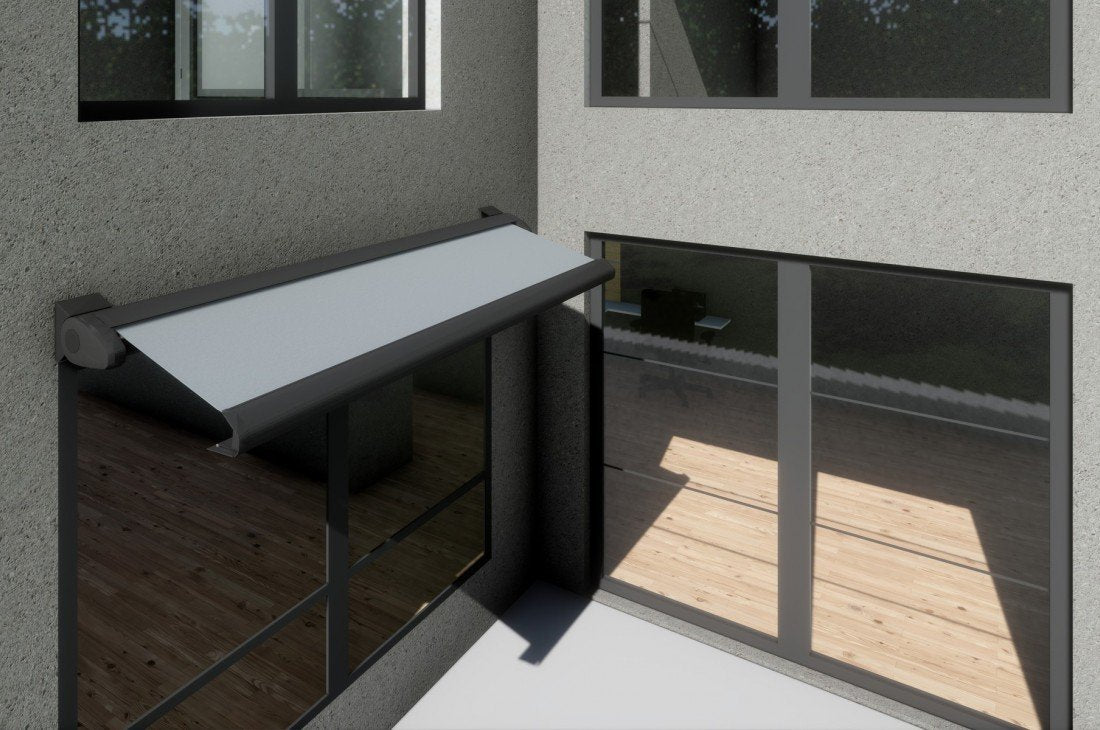
If a room overheats in the sun, where you put the shading matters as much as what you choose. An internal blind can cut glare and make a room more comfortable, and for many homes it is enough. But by the time sunlight reaches an internal blind it has already passed through the glass, and much of its energy ends up in the room as heat. External shading intercepts the sun before it reaches the glazing, which is why it is generally the more effective option for heat. This page explains when external shading is worth considering, the main types we can discuss, and the practical questions that decide whether it suits your home.
Heat and glare are different problems
Glare is about brightness and contrast: a screen you cannot read, sun in your eyes at the dining table, a television washed out. Solar heat gain is about energy coming through the glass and warming the room. Internal blinds, especially solar screen blinds, can handle glare very well while keeping a view out. When the real problem is heat building up through the afternoon, external shading tends to make a bigger difference. Our heat and glare page covers both in more detail.
When external shading is worth considering
- South- and west-facing glazing that gets strong afternoon or evening sun.
- Large glazed areas such as bifold and sliding doors, garden rooms and extensions.
- Rooms where heat, rather than glare alone, is the complaint.
- Spaces where you would rather keep the glass clear inside, without blinds across the view.
It is less likely to be the answer for north-facing rooms, for windows you cannot safely reach or fix around from outside, or where the building's appearance, a listed status or a landlord makes external changes difficult.
Types of external shading
Vertical external screens
Fabric screens that drop down outside a window or door, running in side channels or on guides. Screen fabrics can reduce heat and glare while keeping some view out, depending on the fabric. Side-guided systems that retain the fabric edge are covered on our external ZIP screens page.
Awnings
Projecting fabric canopies that shade a patio and the glazing behind it. They work best when the sun is high and the shade needs to extend out from the wall. See awnings.
Pergola shading
Overhead shading on a framed structure, for a defined outdoor area rather than a single window. See pergolas.
Which type makes sense depends on the angle of the sun at the times the room overheats. Low evening sun from the west comes in almost horizontally, so an overhead awning does little for the glass and a vertical screen usually does more. High midday sun on a south face can be handled well by an awning with enough projection.
What we check at survey
- Orientation and times of day when the room overheats.
- Fixing positions above and around the opening: the wall, the frame head, soffits, cladding and any cables or pipes.
- Access for fitting and for future maintenance, including upper floors.
- Wind exposure, which affects which systems are suitable and how they should be used.
- Operation: manual or motorised, and where power can be brought if motorised. Motorisation is available on selected systems.
- Permissions: for listed buildings, conservation areas, flats and some estates, consent may need checking before external changes.
We do not quote heat-reduction figures on this page. Performance depends on the specific fabric, system and site, and the specification is confirmed at a site survey.
Combining inside and outside
External shading does not have to replace internal blinds. Many homes use an external screen for heat on the hottest days and an internal blind for privacy or darkness at night. Tell us how you use the room and we will suggest the simplest combination that works. Book a free survey to talk it through on site.
Other outdoor options
- External ZIP screensSide-guided vertical screens outside the glass
- AwningsProjecting shade for patios and sun-facing glazing
- Solar screen blindsInternal screen fabrics for glare with a view out
- Heat and glareUnderstanding the problem before choosing a product
- Conservatory blindsInternal options for glazed rooms
Related advice
Questions we get asked
Free, no obligation
Tell us about your space
Send us a few details or book a visit. We will look at orientation, fixing and how you use the space, and tell you honestly what will work.
Ask about outdoor shadingVisit our showroom
Or call 01223 756519