Curtain Tracks & Poles

The hardware is part of the curtain design. A beautiful curtain on the wrong track or pole can stack poorly, feel heavy to draw or hang at the wrong height.
Book a Free Home Survey Call 01223 756519

Curtain Tracks & Poles

Why the hardware matters

The track or pole decides where the curtain hangs, how it moves, how far it clears the glass when open and how long it lasts in daily use. It also limits which headings you can choose. We specify hardware alongside the curtains rather than as an afterthought.

Curtain tracks

Tracks are usually the best choice where:

  • the hardware should be discreet
  • a bay or bend needs to be followed
  • the curtains are heavy or interlined
  • a wave heading is used
  • motorisation is planned now or later
  • ceiling fixing suits the room

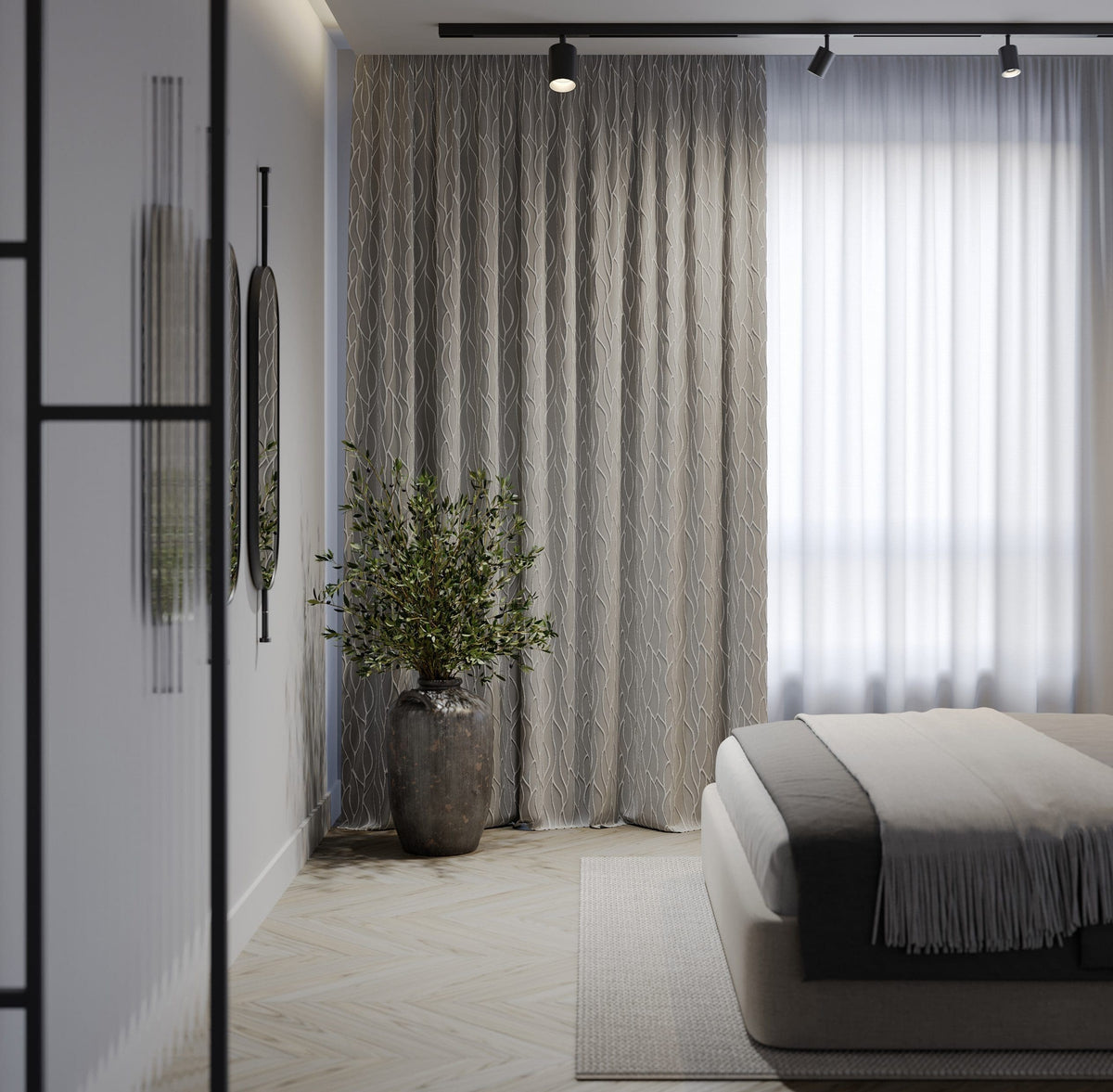
Tracks can be wall or ceiling fixed, and some are designed to be bent to follow a bay. Double tracks carry a sheer and a main curtain independently.

Curtain poles

Poles are usually the best choice where:

  • decorative hardware is part of the design
  • eyelet curtains are used
  • the finish, finials and rings matter
  • the window suits a visible straight pole, or a bay pole designed for the angles

Weight, span and supports

Every track and pole has limits on the weight it can carry and the distance between supports. We use the manufacturer's data for the exact system rather than guessing, and add brackets or supports where the span and curtain weight need them.

Projection, returns and stack

Projection is how far the curtain stands from the wall; it needs to clear sills, radiators and any blind behind. Returns bring the curtain back to the wall at the sides, which helps with light and draughts. Stack is the space the curtain takes up when open. Extending the track or pole beyond the window lets the curtains stack clear of the glass.

Pelmets and fascias

Where offered for the chosen system, pelmets, track fascias and concealed tracks can hide the hardware and help reduce light from above.

Fitting

We check the fixing surface above the window, whether plaster, masonry, timber or ceiling, and choose fixings to suit. Heavier curtains may need fixings into the structure rather than the plaster alone. Everything is confirmed at your free home survey.

Honest suitability

Is it right for your window?

Every recommendation comes with a reason. Where something else would serve you better, we say so — and suggest what to consider instead.

Where this works well

  • Bay windows (tracks) Recommended

    A bent track follows the bay smoothly, especially with tight angles.

  • Wave headings Recommended

    Wave depends on a dedicated track with the right carrier spacing.

  • Decorative period rooms (poles)

    A pole with finials and rings becomes part of the room's character.

  • Ceiling fixing

    Adds height and reduces light and draughts from above.

    Worth knowing: Depends on the ceiling construction and joist positions; confirmed at survey.

  • Heavy interlined curtains With conditions

    The right track or pole carries heavy curtains smoothly.

    Worth knowing: Needs enough supports and suitable fixings, specified from manufacturer data.

Where we’d suggest something else

  • Motorising eyelet curtains on a pole

    Why: Eyelets thread directly onto a pole, which is not a motorised system.

    The limitation: If powered operation matters, the heading and hardware need to change.

    Consider instead: Motorised curtains

  • No wall space above or beside the window

    Why: Tracks and poles need room for brackets and for the curtains to stack.

    The limitation: In a tight recess the curtains can cover part of the glass when open.

    Consider instead: Perfect Fit blinds

Fabrics and linings

The hardware needs to match the curtain it carries. Lined, blackout and interlined constructions are progressively heavier, which affects the track or pole, the number of supports and the stack space.

Standard lining is a separate backing layer sewn behind the face fabric. It protects the fabric from direct sun, adds body and helps the curtain hang and fold consistently.

Blackout lining is designed to stop light passing through the curtain itself. It does not make a room completely dark: light can still find its way around the edges, above the track or pole, beneath the hem and where the curtains meet.

Interlining is a soft layer placed between the face fabric and the lining. It adds weight, fullness and a more insulating construction, and gives many fabrics a richer drape.

The exact fabrics and linings available, and how they behave together, depend on the fabric you choose. We confirm the construction at your consultation.

Tracks, poles and operation

The choice of track or pole decides how the curtains can be operated:

  • Hand-drawn: the simplest option, and quiet in use. Suits most headings on poles and tracks.
  • Wands: a slim rod clipped to the leading edge, so you draw the curtain without handling the fabric. No cords involved.
  • Cord-drawn tracks: a continuous cord opens and closes the curtains. Any looped cord must be held taut by a tensioner or safety device fixed to the wall.
  • Motorised tracks: available on selected track systems, with control options that depend on the system chosen. Motorisation removes operating cords altogether.

Eyelet curtains run on poles and are drawn by hand. Wave curtains need a dedicated track, which can be manual or motorised on selected systems.

Child safety

Where a curtain track is operated by a looped cord, the loop must be held taut by a cord tensioner or safety device fitted to the wall, so it cannot form a hanging loop within reach of children. We fit any required safety devices as part of installation.

Hand-drawn curtains and wands have no looped cords, and motorised tracks remove operating cords altogether, which makes them sensible choices for children's rooms and family homes. See our guide to child-safe window coverings.

Compared with the alternatives

Bay window curtains

How tracks and bay poles are planned around angles, returns and stack in a bay.

Motorised curtains

Powered tracks on selected systems, for tall, wide or heavy curtains.

Curtain headings

Which headings need a track, which need a pole and which work on both.

Questions we get asked

Track or pole for a bay window?

A correctly specified track usually follows a bay more smoothly, especially with tight bends or heavy curtains. A bay pole can work where you want visible hardware.

Can curtain tracks be ceiling fixed?

Many can. It depends on the ceiling construction and the track, which we check at survey.

Can you fit tracks and poles for curtains I already have?

Talk to us about it. We will check the heading and weight of your curtains to make sure the hardware suits them.

How far should a pole extend beyond the window?

Enough for the curtains to stack clear of the glass when open. The amount depends on the fabric, lining and heading, so we work it out for your window.

Free, no obligation

Book your Free Home Survey

We’ll measure properly, bring samples to see in your own light, talk you through what suits each window, and give you a no-obligation quotation.

Book a Free Home SurveyVisit our showroom

Or call 01223 756519