Bifold Door Blinds

Bifold doors create a large area of glass with very little tolerance for the wrong blind. The right answer depends on how the doors fold, where the handles sit and how much space the frame allows.
Book a Free Home Survey Call 01223 756519

Bifold Door Blinds

Options we compare

  • Frame-mounted, no-drill systems that move with each door panel, where the doors are compatible
  • Pleated and cellular blinds, which are compact where clearance is limited
  • Roller blinds above the opening, where there is fixing space and the doors can operate freely
  • Vertical blinds that sit independently across a broad opening
  • Curtains, where there is room to stack them to the side

What we check

  • Folding direction and stack position
  • Handle projection and panel clearances
  • Glazing bead and frame compatibility
  • Fixing space at the head and reveals
  • How often the doors are opened
  • Privacy, glare and child-safety needs, and whether you want motorisation

No single blind works on every bifold system, and we will not promise compatibility from the word bifold alone.

Blinds that move with the doors

On compatible doors, a frame-fitted blind is mounted on each glazed panel, so the blind folds away with the door and never needs to be raised before you open up. Perfect Fit blinds and other bead-fitted systems work this way. The fit depends on the depth of the glazing bead and how far the handles and hinges project, which is why we check each door rather than assuming.

Blinds that stay independent

Where frame-fitted blinds are not compatible, or where you want the whole opening clear, a treatment that sits above or beside the doors can be better: vertical blinds that stack to one side, roller blinds above the opening if there is fixing space, or curtains where there is room to stack them. The doors must be able to fold without catching the blind, so the stack position matters as much as the blind.

Light, glare and privacy

Large glazed openings often face the garden and the afternoon sun. Screen or light-filtering fabrics keep the view while cutting glare; blackout is rarely needed here. Remember that sheer and screen fabrics give more privacy in daylight than at night, when the room is lit.

Made to measure and fitting

Each panel is measured individually. We agree at the survey how the blinds will sit when the doors are stacked open, and whether handles need a cut-out or extra clearance.

Key features

Motorisation
Available on selected ranges
No-drill fitting
Possible on compatible windows — confirmed at survey

Honest suitability

Is it right for your window?

Every recommendation comes with a reason. Where something else would serve you better, we say so — and suggest what to consider instead.

Where this works well

  • Doors opened every day Recommended

    A frame-fitted blind folds with each panel, so there is nothing to raise first.

  • Little space above the doors

    Blinds fitted to the door panels do not need space at the head of the opening.

    Worth knowing: Depends on bead depth and handle projection on your doors.

  • Wide openings with afternoon sun With conditions

    Screen fabrics cut glare while keeping the view of the garden.

    Worth knowing: Internal blinds manage glare better than heat; for serious heat gain external shading is more effective.

  • Doors with deep handles or tight clearances Specialist survey

    Some bifold handles and hinges project far enough to foul a blind or its frame.

    Worth knowing: We check projection and panel clearance on each door before recommending anything.

Where we’d suggest something else

  • Bedrooms needing full darkness on bifolds

    Why: Multiple narrow panels each leave edge gaps, so full darkness is hard to achieve across a bifold.

    The limitation: Even with blackout fabric, light gets in between panels.

    Consider instead: Blackout curtains on a track

  • One large blind across the whole opening

    Why: A single wide blind must be fully raised before the doors can fold and may block the stack.

    The limitation: It works against how bifolds are used.

    Consider instead: Vertical blinds

Fabrics and finishes

Pleated and cellular fabrics are the most common choice for frame-fitted bifold blinds because they are light and compact. Roller and Venetian formats are possible on some systems. Colours range from whites and neutrals to darker tones chosen to match anthracite or grey door frames.

For independent treatments, vertical blind louvres and roller fabrics give a wider choice of textures and screen fabrics.

Controls

Frame-fitted pleated and cellular blinds are usually moved by hand along the frame, with no cord. Roller and vertical blinds use a chain or wand, or motorisation on selected systems.

Motorisation is available on selected frame-fitted and roller systems; whether it suits your doors depends on the system and the fixing position.

Child safety

Internal blinds supplied in the UK must meet child-safety requirements, following BBSA guidance, and the blinds we fit are supplied with the required safety devices.

Frame-fitted pleated and cellular blinds on door panels are usually operated without a loose cord, which suits family rooms that open onto the garden. Where a chain or cord is used, it is secured with the required safety device.

Compared with the alternatives

Perfect Fit blinds

Fitted to each glazed panel with no drilling on compatible doors, so the blind moves with the door. The first thing we check for most bifolds.

Vertical blinds

Independent of the doors, stacking to one side of the opening. Good where frame-fitted blinds are not compatible or you want easy walk-through access.

No drill blinds

An overview of the frame-fitted systems available, including FITtoFRAME, and how compatibility is checked.

Wave curtains

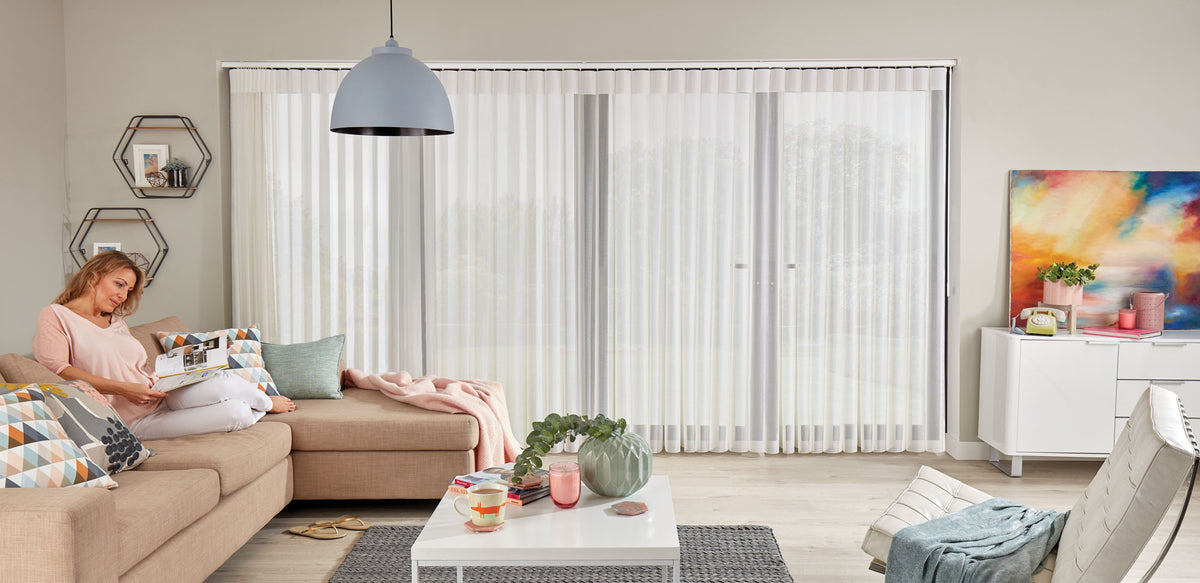
A soft full-height treatment where there is space to stack the curtains beyond the opening.

Questions we get asked

Can blinds stay on the doors when they fold?

With a compatible frame-mounted system, yes. The blind moves with each panel.

Do bifold blinds need drilling?

Not always. No-drill systems are possible on compatible doors, checked at survey.

Can bifold blinds be motorised?

Some solutions can, depending on the system and where it is fitted.

Will a blind stop my bifold doors folding flat?

A frame-fitted blind adds a little depth to each panel. We check that the doors still stack properly and that handles clear the blind before recommending it.

Free, no obligation

Book your Free Home Survey

We’ll measure properly, bring samples to see in your own light, talk you through what suits each window, and give you a no-obligation quotation.

Book a Free Home SurveyVisit our showroom

Or call 01223 756519