Full Height Shutters

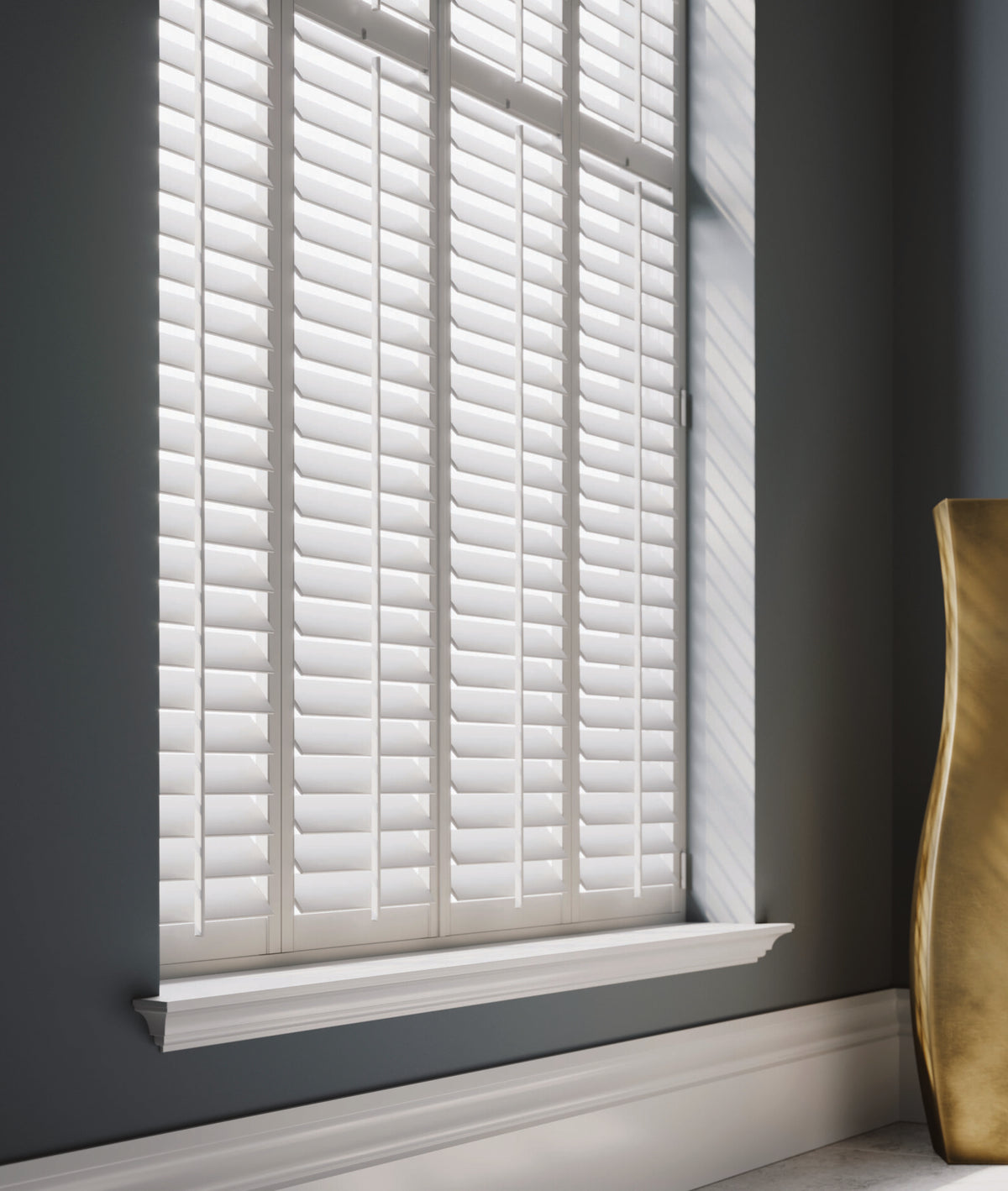
Full height shutters cover the whole height of the window with a clean, continuous panel arrangement. They are one of the most versatile styles, suiting sash and bay windows through to contemporary glazing.
Book a Free Shutter Survey Call 01223 756519

Full Height Shutters

How full height shutters work

Full height shutters cover the whole window, from the top of the frame to the sill, with a single set of hinged panels. Each panel holds a field of adjustable louvres. You can tilt the louvres to change the light and view, or fold whole panels back to clear the glass completely.

A horizontal midrail is often added to strengthen taller panels and to line up with a transom or the meeting rail of a sash window. Depending on the range and configuration, the louvres above and below the midrail can be tilted independently. That gives you a useful amount of privacy control without the extra hinges of a tier-on-tier design.

Light and privacy

With the louvres angled downwards, people outside see the slats rather than into the room, while daylight still reaches the ceiling. Tilted fully closed, louvres cut out much of the light, but not all of it. Light passes between the louvres, around the panel edges and through the gaps needed for the panels to move, so full height shutters are not a blackout product. If you need a properly dark bedroom, look at Shutter & Shade or layering with curtains.

Materials

We offer hardwood, faux-wood and waterproof ranges. The right choice depends on the room: timber for dry living spaces where natural grain matters, faux-wood or waterproof ranges where there is steam or condensation. The Fabrics and finishes panel on this page sets out the differences.

The window

Full height shutters suit a wide range of window proportions, from Victorian sashes to modern casements, and they are one of the most common choices in bay windows. They work best where there is enough space either side of the window for the panels to fold back, and where handles sit clear of the louvres. On sash windows, we align the midrail with the meeting rail so the shutter follows the window's own lines rather than cutting across them.

Made to measure and fitting

Every shutter is made to the measurements taken at your survey. We decide whether the shutter sits inside the recess or on the face of the wall, choose a frame that suits the reveal and check that the panels clear handles, sills and radiators. Our own fitters install the shutters, check the panels and louvres move properly and show you how to use them. Book a free shutter survey to see which layout suits your windows.

Key features

Kitchens & bathrooms
Moisture-suitable ranges available for selected rooms

Honest suitability

Is it right for your window?

Every recommendation comes with a reason. Where something else would serve you better, we say so — and suggest what to consider instead.

Where this works well

  • Sash windows Recommended

    The midrail can line up with the meeting rail, so the shutter follows the window's own proportions.

  • Bay windows

    Each section of the bay gets its own panels, giving a continuous look around the bay.

    Worth knowing: The bay needs its own layout, with angles and handles measured on site.

  • Kitchens and bathrooms

    Faux-wood and waterproof ranges cope with steam and are easy to wipe clean.

    Worth knowing: Choose a moisture-suitable range. We would not suggest hardwood for rooms that regularly get wet.

  • Street-facing rooms With conditions

    Split louvre control lets you angle the lower louvres for privacy while opening the upper ones for light.

    Worth knowing: Each panel opens as one piece. If you want to swing the top open on its own, tier-on-tier is the better fit.

Where we’d suggest something else

  • Bedrooms that must be dark

    Why: Light passes between the louvres and around the panel edges, even when fully closed.

    The limitation: Louvred shutters reduce light but are not blackout.

    Consider instead: Shutter & Shade

  • Wide patio and sliding doors

    Why: A wide opening needs many hinged panels, which become heavy to fold and need a lot of space.

    The limitation: Hinged panels need folding space either side.

    Consider instead: Tracked shutters

Materials and finishes

Hampton faux-wood shutters

Hampton is a faux-wood (HSPVC) shutter handcrafted in the UK. Its 100% waterproof composition makes it well suited to kitchens and bathrooms. It is offered with 63mm, 76mm or 89mm louvres in Full Height, Tier-on-Tier, Café Style and Bay styles, and Hampton shutters carry a 10-year manufacturer's warranty. These details apply to Hampton only; other ranges have their own specifications, which we confirm with your quotation.

Hardwood

Genuine timber with a natural grain, available painted or stained on selected ranges. Hardwood is the traditional choice for living rooms, dining rooms and bedrooms, but it is not the material we would suggest for rooms that regularly get wet or steamy.

Faux-wood (HSPVC)

A solid engineered material with a painted finish designed to look like timber. Faux-wood is tolerant of moisture and easy to wipe clean, which makes it a practical choice for kitchens, bathrooms and busy family rooms.

Waterproof vinyl

Some ranges use a waterproof vinyl construction intended for high-humidity rooms. Suitability for a shower room or a window that gets splashed is range specific, so we confirm it against the actual window.

Colours, louvres and frames

Colours, louvre widths, frame styles and hinge colours vary from range to range. We bring samples to your survey, and you can also see finishes at our showroom in Soham (call ahead to check what is on display).

Operation and hardware

Tilting the louvres

Most louvred shutters use a tilt rod to angle the louvres together. The traditional option is a rod on the front of the panel; an offset rod sits to one side for a clearer view; and on selected ranges a concealed mechanism hidden on the edge of the louvres removes the visible rod altogether.

Split louvre control

Where the design includes a midrail, the louvres above and below can often be tilted separately, so you can angle the lower louvres for privacy and open the upper ones for light.

Panels and hinges

Panels are hinged to the shutter frame and fold back to clear the window. The number of panels, which way they open and where they fold to are agreed at the survey so they clear handles and furniture.

Child safety

Shutters are operated by hand and have no cords or chains, so there are no looped cords to manage. As with any hinged panel or furniture, adults should open and close the panels and keep small fingers clear of the hinges.

Compared with the alternatives

Tier-on-tier shutters

Tier-on-tier splits each panel into separate upper and lower sections that open independently. Choose it if you often want the top of the window open and the bottom closed; choose full height if you prefer simpler, uninterrupted panels.

Café style shutters

Café shutters cover only the lower part of the window. They keep more sky visible but give no privacy or light control higher up.

Shutter & Shade

Adds a shade layer to the shutter for better room darkening, which is useful in bedrooms where louvres alone let in too much light.

Wooden blinds

Wooden blinds give a similar slatted look for less depth of fitting and can be raised clear of the window, but they do not have the fixed frame and architectural presence of a shutter.

Questions we get asked

Are full height shutters blackout?

No. Closing the louvres cuts out much of the light, but some will still come through between the louvres and around the panels. For a dark bedroom, consider Shutter & Shade or adding curtains.

Can the top and bottom louvres be tilted separately?

Often, yes. Where the design includes a midrail, many configurations allow split louvre control. We confirm what is possible for your chosen range at the survey.

Do full height shutters work in bay windows?

Yes, and they are one of the most popular choices for bays. The bay needs its own layout, so we measure every angle and handle on site.

Can I have full height shutters in a bathroom?

Yes, in a moisture-suitable range such as a faux-wood or waterproof shutter. We would not suggest hardwood for rooms that regularly get wet.

Full height or tier-on-tier: which should I choose?

Full height gives a cleaner, simpler look. Tier-on-tier lets you open the top and bottom sections separately. If you are unsure, we can show you both at the survey.

Free, no obligation

Book your Free Home Survey

We’ll measure properly, bring samples to see in your own light, talk you through what suits each window, and give you a no-obligation quotation.

Book a Free Shutter SurveyVisit our showroom

Or call 01223 756519