Patio Door Blinds

Sliding patio doors combine a wide span of glass with a door you walk through every day. The right blind depends on how the doors slide, where the handles are and how much space there is for the blind to stack.
Book a Free Home Survey Call 01223 756519

Patio Door Blinds

Vertical blinds

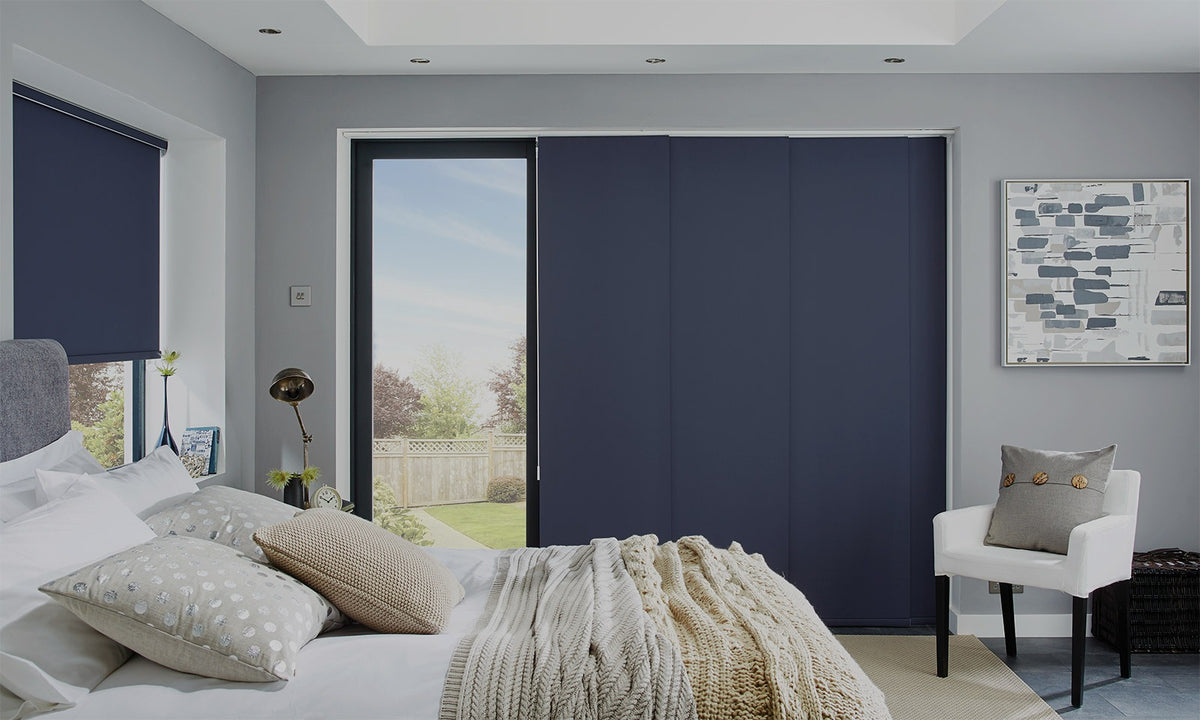
Vertical blinds are the traditional choice for patio doors, and for good reason. They hang from a track above the opening, stack neatly to one side and let you walk through without raising anything. The louvres rotate to control light and privacy while the blind is drawn. The main thing to plan is the stack: when open, the louvres gather at one side and cover part of the glass, so we usually stack them on the fixed panel rather than the sliding one.

Frame-fitted blinds on the door panes

Perfect Fit blinds and other frame-fitted blinds can be fitted to each glazed panel on compatible doors. The blind moves with the sliding panel, sits close to the glass and needs no drilling. The key checks are the depth of the glazing bead and whether the sliding panel can pass the fixed one with the blind fitted, because the gap between the two is often small.

Roller blinds

A roller blind above the opening, or a pair of rollers, gives a clean look when there is enough fixing space at the head and the blind can be raised clear of the door. Screen and light-filtering fabrics keep the view of the garden while cutting glare.

Stacking and clearance

Whatever the blind, it needs somewhere to go when open. We check the space above the doors, the width beside them, the handle positions and whether anything, such as a radiator or furniture, limits where the blind can stack.

Light and privacy

Patio doors often face the garden and the afternoon sun. Screen fabrics cut glare in the day, but give less privacy after dark when the room is lit. Vertical and slatted options give privacy you can adjust.

Honest suitability

Is it right for your window?

Every recommendation comes with a reason. Where something else would serve you better, we say so — and suggest what to consider instead.

Where this works well

  • Doors used every day Recommended

    Vertical blinds stack to the side, so you can walk through without raising anything.

  • Privacy you can adjust

    Vertical louvres rotate to let light in while blocking views.

    Worth knowing: The stack covers part of the glass when open.

  • Blinds fixed to the door panes With conditions

    Frame-fitted blinds move with the sliding panel and need no drilling on compatible doors.

    Worth knowing: The sliding panel must still pass the fixed one; we check the gap at survey.

  • Afternoon sun and glare

    Screen fabrics cut glare while keeping the garden view.

    Worth knowing: They give less privacy after dark.

Where we’d suggest something else

  • Roman blinds on patio doors

    Why: The stack sits across the top of the opening and must be raised before walking through.

    The limitation: The deep stack reduces head height and light.

    Consider instead: Vertical blinds

  • Full darkness across patio doors

    Why: A wide opening leaves gaps at the sides and between louvres or panels.

    The limitation: Blackout fabric alone will not make the room fully dark.

    Consider instead: Blackout curtains

Fabrics and finishes

Vertical blind louvres in plain, textured and patterned fabrics, including blackout and moisture-suitable options on selected ranges. Roller fabrics include screen and light-filtering choices. Frame-fitted blinds come in pleated, cellular, roller and Venetian formats depending on the system.

Controls

Vertical blinds use a cord and chain or a wand. Roller blinds use a chain, cordless or motorised operation on selected systems. Frame-fitted pleated and cellular blinds are moved by hand. We position controls so they do not trail where people walk through.

Child safety

Internal blinds supplied in the UK must meet child-safety requirements, following BBSA guidance, and the blinds we fit are supplied with the required safety devices.

Patio doors are often in family rooms. Wand-controlled verticals, cordless and motorised options reduce loose cords; any chain or cord is secured with the required safety device at the correct height.

Compared with the alternatives

Vertical blinds

Stack to the side for easy access and give adjustable privacy. The usual first option.

Perfect Fit blinds

Fitted to each glazed panel on compatible doors, so the blind moves with the door.

Bifold door blinds

If your doors fold rather than slide, the choices and checks are different.

Wave curtains

A soft, full-height alternative where there is space beside the doors for the curtains to stack.

Questions we get asked

Which side should vertical blinds stack on?

Usually the fixed panel, so the sliding door stays clear when the blind is open. We agree this at the survey.

Can blinds be fitted to the sliding doors themselves?

On compatible doors, frame-fitted blinds can be fixed to each panel and slide with it. We check the gap between panels first.

Do patio door blinds need drilling?

Vertical and roller blinds are fixed above the opening. Frame-fitted blinds need no drilling on compatible doors.

Will I still have privacy at night?

With vertical blinds, blackout or opaque fabrics, yes. Screen fabrics give less privacy after dark.

Free, no obligation

Book your Free Home Survey

We’ll measure properly, bring samples to see in your own light, talk you through what suits each window, and give you a no-obligation quotation.

Book a Free Home SurveyVisit our showroom

Or call 01223 756519