Large & Tall Window Blinds

Large and tall glazing changes the engineering of a blind. Weight, fabric behaviour, stack size, control effort and access all matter more as the window grows, and several blinds are often better than one.
Book a Free Home Survey Call 01223 756519

Large & Tall Window Blinds

Why size changes the answer

As a blind gets wider and taller, it gets heavier, the fabric has more tendency to bow or ripple, the stack when raised takes up more glass, and it takes more effort to operate. A blind that works perfectly on a standard window may be the wrong choice on a floor-to-ceiling pane.

The answer may be multiple blinds

One oversized blind is not always the best design. Dividing an opening in line with the window mullions can:

  • Reduce the weight of each blind
  • Make each blind easier to operate
  • Give independent light control across the room
  • Make servicing easier
  • Line the shading up with the architecture, so the joins fall where the frame already is

We will suggest where to split an opening at the survey, and show you how it will look when the blinds are up and down.

Potential solutions

Depending on the size and shape of the glazing:

Tall glazing

Motorisation becomes particularly useful when controls or hardware would otherwise be out of reach, such as in double-height rooms, stairwells and galleried landings.

What we survey

Width and drop, mullion positions, opening sections, fixing structure, control access, where you would like the opening split, fabric requirements and whether power is available. Every system has its own size limits, so we check your measurements against the specific system before confirming anything.

Key features

Motorisation
Available on selected ranges

Honest suitability

Is it right for your window?

Every recommendation comes with a reason. Where something else would serve you better, we say so — and suggest what to consider instead.

Where this works well

  • Wide glazing with mullions Recommended

    Splitting blinds at the mullions keeps each blind manageable and lines up with the frame.

  • Wide openings that need side access

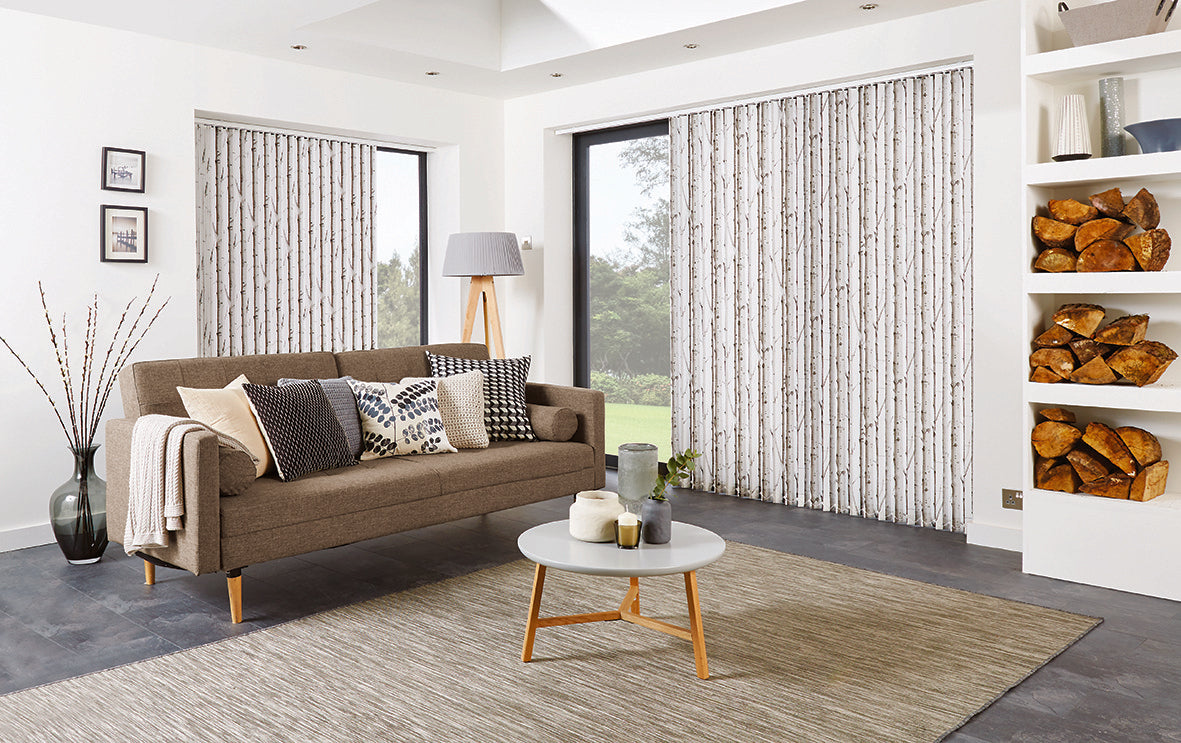
    Vertical blinds stack to one side and handle wide spans well.

    Worth knowing: The stack takes up some glass at the side when open.

  • Double-height and stairwell windows With conditions

    Motorised blinds keep high glazing usable without ladders.

    Worth knowing: Needs a suitable system and power route, confirmed at survey.

  • A single very large pane Specialist survey

    Some systems can cover large single panes.

    Worth knowing: Every system has size limits; we check your measurements before confirming.

Where we’d suggest something else

  • One oversized manual blind

    Why: A single very large blind is heavy to operate and puts more strain on the mechanism.

    The limitation: It can be tiring to use and harder to service.

    Consider instead: Multiple or motorised blinds

  • Very wide Roman blinds

    Why: Wide Roman blinds are heavy and create a deep stack that blocks light.

    The limitation: The stack takes a large band of glass when raised.

    Consider instead: Wave curtains

Fabrics and finishes

Roller fabrics, vertical louvres, pleated and cellular fabrics and curtain fabrics are all available, with screen and light-filtering options popular for large glazing where the view matters. Where several blinds sit side by side we use the same fabric and bottom bar so they read as one treatment.

Controls

Chain, wand and cordless controls suit blinds within easy reach. Motorised operation, available on selected systems, lets several blinds move together and removes the effort of lifting heavy fabric. It is often the most practical choice for tall windows.

Child safety

Internal blinds supplied in the UK must meet child-safety requirements, following BBSA guidance, and the blinds we fit are supplied with the required safety devices.

Long drops mean long chains or cords. Motorised and cordless options remove them; where a chain is used, the safety device is fitted and secured at the correct height.

Compared with the alternatives

Vertical blinds

Well suited to wide openings and doors, stacking to one side.

Motorised blinds

Removes the effort of operating large blinds and lets groups move together.

Wave curtains

Soft full-height coverage on a track, with the curtains stacked beyond the glass.

Roller blinds

Clean and compact, often used in groups split at the mullions.

Questions we get asked

What is the largest blind you can make?

It depends on the blind type, system and fabric, and each has its own limits. We check your measurements against the specific system at the survey rather than quote a general figure.

Is one big blind better than several smaller ones?

Not always. Splitting at the mullions often gives easier operation, independent light control and a neater result.

Can several blinds be operated together?

Yes, with motorised operation on selected systems.

Why do large roller blinds sometimes ripple?

Wide fabric has more tendency to bow. Correct specification, the right fabric and splitting the opening all help.

Free, no obligation

Book your Free Home Survey

We’ll measure properly, bring samples to see in your own light, talk you through what suits each window, and give you a no-obligation quotation.

Book a Free Home SurveyVisit our showroom

Or call 01223 756519